Why Judo?
Judo has evolved from being a martial art into one of the world’s most popular sports.
Since the 1964 Olympic Games, Judo has progressed rapidly and is a popular contest sport.
Since the 1964 Olympic Games, Judo has progressed rapidly and is a popular contest sport.
However Judo is more than just a sport, it is an effective educational system in both physical and moral spheres.
Judo training is an ideal form of physical exercise and provides an excellent cardiovascular workout, which improves stamina, general health and overall fitness.
Physical strength is also improved, as is flexibility. Physical co-ordination improves dramatically from participation in Judo and reflexes are also developed together with mental reaction time.
The moral benefits of Judo are a direct result of the transition from martial art to what Kano termed “Do” or “way of life”. Kano added a strict code of ethics and a humanitarian philosophy to his system. His Judo instructors and students were expected to be outstanding examples of good character and honest conduct. Contest outside of the training hall or behavior that brought shame to the school would lead to suspension or even expulsion. Kano’s ultimate concern for the well-being of both the individual and the community is reflected in his teaching methods and one of Judo’s guiding principles is “mutual benefit and prosperity”.
He believed that the diligent practice of Judo should lead to the realization that one could not progress at the expense of others; only mutual prosperity offered the key to any real progress in human life.
These principles still underpin the sport today and this can be seen from the respect shown between rival exponents.
Judo is an ideal sport for all ages, sizes and shapes, males or females,and even people that aren’t as genetically gifted as others. It is an all year round activity and relatively inexpensive. Confidence and selfesteem increase as a player progresses through the ranks and the nature of the grading system that the next goal is always realistic and achievable with effort. The grading system also ensures that regardless of their skill level all Judo players can actively compete with players of similar ability.
Because of the potentially dangerous nature of the sport, strict discipline is essential and great emphasis is placed on safety, hygiene and etiquette. Safety is controlled by the contest rules, which are constantly updated to exclude harmful actions – this allows Judo to be practiced in a spirited manner without undue risk of harm or injury. Cleanliness is essential due to the close physical contact between players and Judo etiquette instills respect, modesty, politeness and general social skills on all participants.
Contest Judo is derived from techniques that were traditionally used in Japan to kill or severely injure opponents on the battlefield – these techniques have been refined and modified and contest rules have been applied to make them safe. Punching and kicking is not allowed, the object of the contest being to throw the opponent largely onto their back with considerable force and speed – this scores “Ippon” and ends the contest.
Players are taught to fall in such a manner that they land safely, great emphasis is placed on mastering the several methods of breakfalling since this gives players the confidence to participate fully. It is also possible to score Ippon by pinning the opponent to the mat for a period of twenty-five seconds. In addition to the sought after Ippon, smaller scores are given for less successful throws and hold-downs broken before the twenty-five second limit.
There are even benefits in defeat as the judo lays great emphasis on discipline and self-control – it is rare indeed to see a player ungracious in defeat at any level from Club training to International competition. A handshake almost always follows the traditional courteous rei (bow) at the end of a contest and the defeated player, though perhaps disappointed with the result, remains respectful of the winner.
Judo has also been seen to actively reduce bullying, bullies flourish most in uncontrolled environments and the discipline of the Dojo (training hall), removes the bully from their position of power. At the same time they themselves learn discipline and self control, quite often whilst losing to players who were previously a victim of their bullying, this gives them a new perspective and a newfound respect for such players.
A useful spin off from Judo training is that by its nature Judo is an ideal form of self-defence however it must be remembered that no system can ever be regarded the complete self-defence. Judo players often find that physical intervention is never needed since they are not easily intimidated and assailants frequently back down when they observe the confident, calm nature of their target. Because of its close contact Judo helps to develop a keen awareness of danger, however should the
worst come to the worst and a Judoka be forced to physically defend their self it offers better self-defence training at close quarters than any other sport.
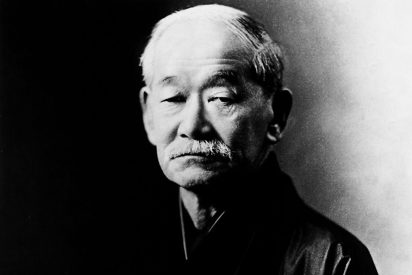
Professor Jigoro Kano founded judo in Japan at the end of the 19th century.
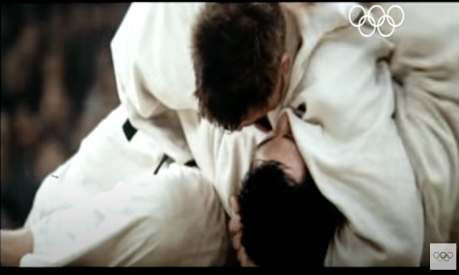
Since the 1964 Olympic Games, Judo has progressed rapidly and is a popular contest sport.

“Judo is the way to the most effective use of both physical and spiritual strength. By training you in attacks and defenses it refines your body and your soul and helps you make the spiritual essence of judo part of your very being. In this way you are able to perfect yourself and contribute something of value to the world. This is the final goal of judo discipline.”
– Jigoro Kano (Grand Master)

History of Judo
Modern judo has its origins in jujitsu, a fighting art that can be traced back over a thousand years into Japanese history. Judo itself, however, is a relatively recent synthesis and owes it existence to the genius of one man: Dr. Jigoro Kano.
Jigoro Kano was born in the seaside town of Mikage in 1860.He and his family moved to Tokyo in 1871. Mr. Kano studied politics and literature at Tokyo Imperial University. He became an instructor of the Gakushuin in 1882 and eleven years later, he was appointed the Headmaster of the Koto Shihan, a teachers’ training school.
In 1909, Professor Kano became the first Japanese member of the International Olympic Committee and two years later, he founded the Japanese Athletic Association and became its first president. Because of his many contributions in the field of athletics, Professor Kano is called the “Father of Physical Education and Sport” in Japan.
Professor Kano is internationally known for the development of judo. Until he was 18 years of age, Jigoro Kano was physically weak. He resolved to improve himself by studying at two jujitsu schools. He soon realized that each school had its strengths and weaknesses. Because there was unnecessary roughness and crudeness in the jujitsu techniques, and because it was difficult to practice without injury he began to reconstruct jujitsu. As he states in his own words: “…so by taking together all the good points I had learned from the various schools and adding thereto my own devices and inventions, I founded a new system for physical culture and mental training.” Kano called his new system Kodokan Judo to differentiate it from the jujitsu forms. “Judo” means “the gentle way” and “kodokan” generally means “a school for studying the way”, “the way” being the concept of life itself.
Again, in Kano’s words:” “There are two reasons why I avoided the term ‘jujitsu’. One is that there were jujitsu schools which often indulged in violent and dangerous techniques in throwing or twisting arms and legs. Seeing these things, many people came to believe jujitsu was harmful. Again, in an exercise hall where supervision was inadequate, the senior pupils would wantonly throw down juniors or pick quarrels, so that jujitsu was despised as something that made rowdies of young men. I wished to show that what I taught was not a dangerous thing, and would not needlessly injure any person, that it was not the jujitsu as it was taught by some people , and that it was “judo”, an entirely different thing.
“The second reason was that when I began to teach jujitsu had fallen into disrepute. Some jujitsu masters made their living by organizing groups composed of their followers, and putting on exhibition matches to which admission fees were charged. Some went so far to stage bouts between professional sumo wrestlers and jujitsu men. Such degrading practices of prostitution of martial arts were repugnant to me, so I avoided the term jujitsu and adopted judo in its stead.”
The Kodokan was first established in 1882 with only nine students the first year. Soon, the new Kodokan Judo became the center of public attention. But its practical merits were looked upon with contempt by most old jujitsu men, including master Hikosuke Totsuka. There soon developed a keen rivalry between the Kodokan and the Totsuka School. Things came to a head in 1886. In Kano’s words: “Under the auspices of the Chief of Metropolitan Police, a grand tournament was arranged between both schools. This was a decisive battle. Defeat would have been fatal to the Kodokan. But in that tournament, to which each school sent 15 picked men, the Kodokan won all the bouts excepting two, which ended in a draw. That brilliant victory established once and for all the supremacy of Kodokan Judo over all jujitsu schools.”
One of the principles of judo is that a stronger opponent can be defeated by turning his strength against himself. Professor Kano explains how in yielding there is strength: “Suppose we estimate the strength of a man in units of one. Let us say that the strength of this man is 10 units, whereas my strength, less than his, is 7 units. Then if he pushes me with all his force, I shall certainly be pushed back or thrown down, even if I use all my strength against him. This would happen from opposing strength to strength. But if instead of opposing him, I leave him unresisted, withdrawing my body just as much as he pushes, at the same time keeping my balance, he will naturally lean forward and lose his balance. In this new position, he may become weak (not in actual physical strength, but because of his awkward position) as to reduce his strength for the moment, say to 3 units only instead of 10 units. But meanwhile I, by keeping my balance, retain my full strength, as originally represented by 7 units. Here then, I am momentarily in a superior position, and I can defeat my opponent by using only half of my strength, or 3 1/2 units against his 3 units. This leaves one-half of my strength available for any other purpose. If I had greater strength than my opponent, I could of course push him back. But even if I wished to and had the power to do so, it would still be better for me first to give way, because by so doing, I should have greatly saved my energy and exhausted my opponent’s.”
Jigoro Kano died in May 1938 while returning from the Cairo International Olympic Conference. Men’s judo was first included in the Olympic Games in 1964 and became a permanent part of the Games in 1972. In 1992, women’s judo became part of the Olympic Games as well. Kano defined the two principles of Kodokan Judo as “Maximum Efficiency with Minimum Effort” and “Mutual Welfare and Benefit”. He said that “physical education should train the body to be strong, healthy and useful in actual life and also make a contribution to the culture of the mind.” His system of judo is just that.